
We spend around a third of our lives asleep.
Years of our lives, when you add it all together, spent with our skin against our sheets.
We think carefully about what we wear. We read skincare ingredients. We look for breathable clothes when it’s hot and soft fabrics when our skin is irritated. Increasingly, we want to know where our clothing came from, what it’s made from and what happens to it when we’re finished with it.
But when it comes to bedding, somehow “soft” has become enough.
Walk through a bedding aisle and you’ll see plenty of sheets described as microfibre, ultra-soft, silky, easy-care or luxury.
But what does microfibre actually mean? And if you’re going to spend thousands of hours wrapped in a fabric, perhaps it’s worth looking a little further than how soft it feels when you first take it out of the packet.
So, What Is Microfibre?
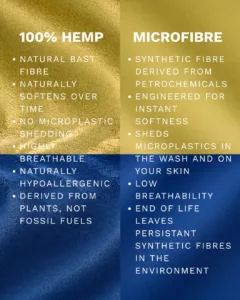
Microfibre isn’t a natural fibre like Hemp, linen or cotton. The name describes extremely fine fibres, and the microfibre commonly used for bedding is generally made from synthetic materials such as polyester.
There are reasons it’s everywhere. Synthetic microfibre can be inexpensive, lightweight, wrinkle-resistant and exceptionally smooth.
But softness isn’t the whole story.
Synthetic textiles can shed tiny fibres during their manufacture, use, washing and disposal. The European Environment Agency identifies synthetic textiles as a source of unintentionally released microplastics, with laundering one pathway by which these fibres enter the environment.
So when we’re choosing something we’re going to sleep in night after night — and wash over and over again — we think it’s reasonable to ask: what is this fabric actually made from?
Your Skin Spends a Lot of Time in Your Sheets
This becomes even more relevant if you have sensitive, reactive, allergy-prone or eczema-prone skin.
 Bedding isn’t a medical treatment, and changing your sheets isn’t going to magically solve a skin condition. But your sleeping environment can affect your comfort.
Heat and sweating can aggravate eczema and sensitive skin, while textile reactions can also come from dyes, resins and other chemicals used during manufacturing.
That’s why we think about more than softness when choosing bedding. Breathability, moisture management, temperature, dyes and finishes, and simply how a fabric feels against bare skin all matter when you’re spending hours wrapped in it every night.
Why Hemp Makes So Much Sense in Bed
Hemp is a bast fibre taken from the stem of the Hemp plant. It’s an incredibly strong natural fibre, but when it’s properly processed and woven for bedding, that strength doesn’t mean sleeping on something resembling a hessian sack.
Quite the opposite.
Good Hemp bedding has a beautiful, relaxed texture that continues to soften with washing and use. Hemp textiles are also valued for their breathability and moisture-management properties — exactly the characteristics we look for in something that’s going to spend eight hours wrapped around us.
That becomes particularly appealing as an Australian winter night turns into an Australian summer night.
Rather than thinking about Hemp sheets as a novelty because they’re made from Hemp, we think they’re simply a very logical use of the fibre.
Strong. Breathable. Comfortable. Natural. Made to be lived in.
Natural Can Still Feel Luxurious
Somewhere along the way, we’ve been taught to associate softness with synthetics.
Microfibre can certainly feel soft. But softness doesn’t have to come from an ultra-fine synthetic fibre.
A beautifully woven 100% Hemp sheet offers something different: natural softness alongside breathability, strength and character. And Hemp has another quality we particularly love in household textiles: it gets better.
Hemp bedding relaxes and softens through use. It develops that lived-in softness that makes you want to climb into bed. That’s our kind of luxury — something really well made that you use constantly and enjoy more as you live with it.
And What About the Environment?
Hemp has an extraordinary sustainability story, but growing the fibre is only one part of making a sheet.
How the Hemp is cultivated, processed, spun, woven, dyed and finished matters. So does how long the finished product lasts. That’s why we prefer to look at the whole journey from farm to shelf rather than reduce sustainability to a green buzzword.
A genuinely sustainable textile should earn its place in your home over years of washing, sleeping and living. For us, choosing strong natural fibres, buying fewer and better things, and keeping them for longer is an important part of that equation.
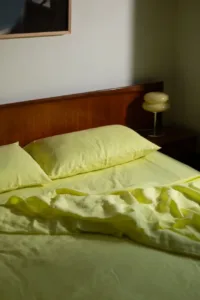
At The Hemp Store, we stock 100% Hemp sheets from Good Studios and Hemp Clothing Australia, made with sustainably sourced Hemp fabric, natural dyes and OEKO-TEX® certified dyes.* They’re Australian-made, beautifully soft and chosen because both brands share our commitment to more thoughtful textiles from farm to finished product. Our new Good Studios Limoncello sheets bring a particularly bright, fresh take on Hemp bedding for spring — but whichever you choose, they’re an investment in a natural fibre you’ll live with every night.
*Certification details should be confirmed against the individual manufacturer’s product information.
Leave a Reply