
Essential Inputs, Not End Products
“Omega” is one of those nutrition words that feels familiar, but often isn’t well understood. It’s used to describe supplements, oils, brain health, skin health, and inflammation – sometimes all at once.
So let’s slow the conversation down and start from the beginning.
Omegas are fats
Omegas are types of fat.
They are not vitamins, hormones, or medicines. But they do effect vitamin absorbtion, hormone regulation and inflammation. They are fats the body uses as structural materials and signalling components.
Every cell in the body is surrounded by a fatty membrane.
The skin barrier is built from fats.
The brain is largely composed of fats.
Omegas matter because they help make these systems work.
The two fats your body cannot make
Most fats can be synthesised by the human body. Two cannot.
These are known as essential fatty acids:
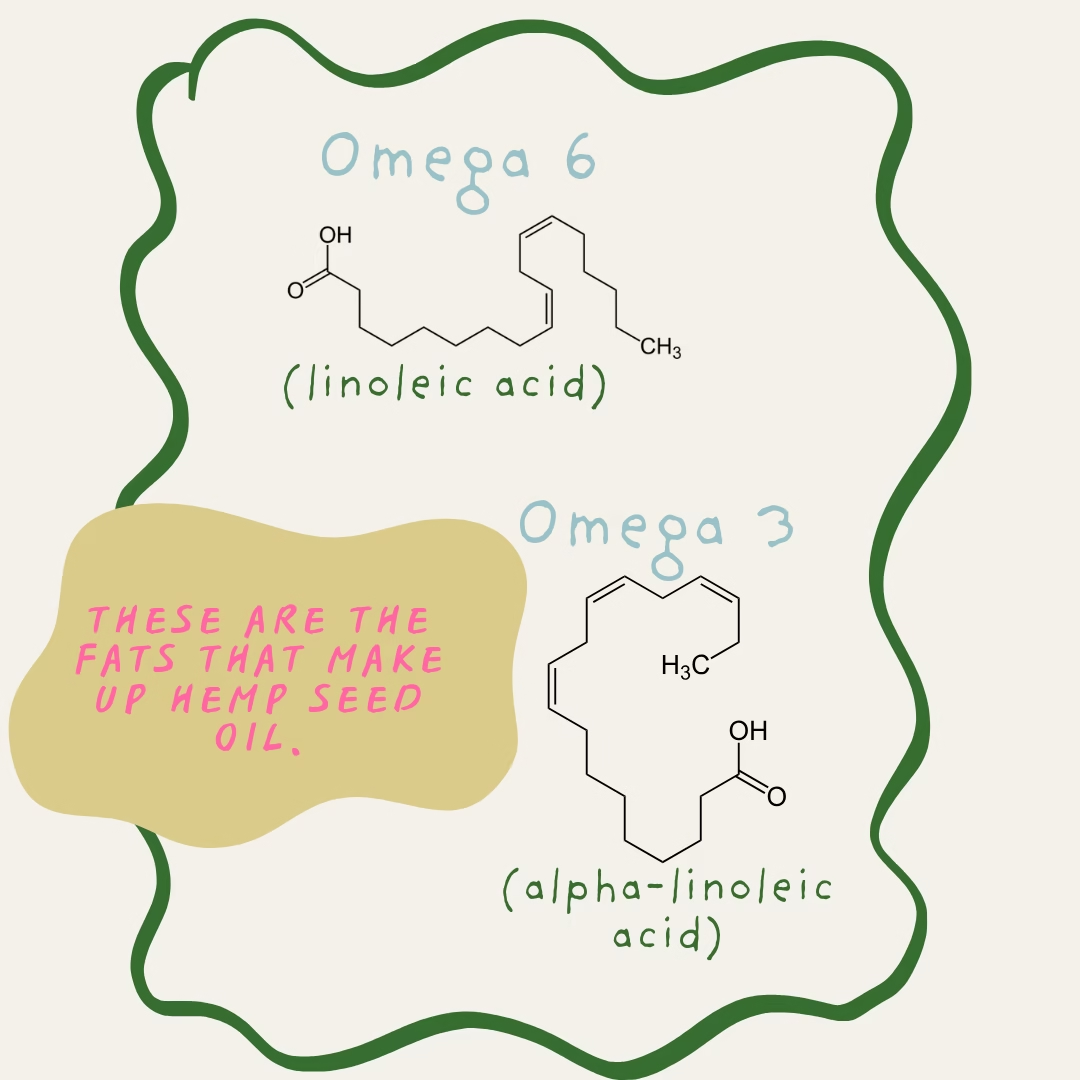
Linoleic acid (LA) – an omega-6
Alpha-linolenic acid (ALA) – an omega-3
“Essential” means they are required, but not innate. They must come from the diet.
These fatty acids are used to:
maintain cell membrane structure
support skin and gut barrier integrity
form lipid (fat)-derived signalling molecules essential in moderating immunity and inflammation.
They operate continuously and quietly, and their effects are cumulative, not immediate.
Inputs vs end products: an important distinction
Not all omegas do the same job.
Some fatty acids act as inputs – raw materials the body incorporates and modifies as needed.
Others are end products – longer-chain fats that arrive already specialised.
LA and ALA function as inputs
EPA and DHA (commonly found in fish and algae oils) are end products
This distinction explains much of the confusion around omega supplements.
End products can be useful for specific goals. Inputs are foundational.
Where Hemp Seed Oil fits
Hemp Seed Oil is a nutritive oil, not a cannabinoid extract.
It provides:
linoleic acid (omega-6)
alpha-linolenic acid (omega-3)
Together, in a balanced, food grade form.
Because these two fatty acids share metabolic pathways, consuming them together supports normal fatty-acid metabolism, rather than emphasising one pathway in isolation.
Hemp seed oil does not supply DHA.
It does not act like CBD.
Its role is nutritional rather than pharmacological: supplying essential inputs that the body can use according to its own regulatory systems.
Context matters:
Omega-6 fats are often described as “inflammatory,” but this is an oversimplification.
Omega-6–derived compounds are involved in:
immune response
wound healing
normal inflammatory signalling
Problems tend to arise when diets are:
very high in refined, industrial omega-6 oils
very low in omega-3 context
low in overall fat quality
Hemp Seed Oil is not a refined industrial oil. It provides omega-6 alongside omega-3, in a whole-food context that is ideally balanced for absorption.
What about DHA, brain health, and neurodegeneration?
Research has linked higher intake of long-chain omegas – particularly DHA – with lower rates of cognitive decline, including Alzeimers and other neurodegenerative conditions in population studies.
A key clarification:
Humans can convert the ALA in Hemp Seed Oil into EPA and DHA found in marine omega supplements (Fish, Krill, Algae oils).
Fatty-acid conversion pathways exist to allow flexibility. Human diets have historically varied, and the body has mechanisms to reshape dietary fats into forms required by specific tissues.
However:
For people with brain-specific goals or confirmed deficiency, direct sources of DHA (such as fish or algae oils) may be more appropriate.
Skin health and barrier function
The skin is a barrier system, and barriers are built from fats.
Linoleic acid is a key component of skin lipids and ceramides. Adequate essential fatty-acid availability supports hydration, resilience, and barrier integrity.
In small human studies, dietary hemp seed oil intake has been associated with:
increased circulating essential fatty acids
changes in downstream lipid metabolites
improvements in skin dryness and itch in people with atopic dermatitis
These findings do not position hemp seed oil as a treatment for eczema. They support its role as nutritional support for skin structure, particularly when used consistently.
Emerging research: fats, skin response, and UV exposure
UV exposure affects skin through inflammatory signalling, oxidative stress, and barrier repair — all lipid-dependent processes.

Data we actually have:
Omega supplementation in humans has been shown to:
increase the minimal erythema dose (you need more UVB to get sunburned)
reduce UV-induced immunosuppression in skin (better immune response after UV exposure)
Reviews suggest omega-3s might offer chemopreventive effects against non-melanoma skin cancers (SCC/BCC), but the evidence is still limited and not definitive.
Animal and mechanistic studies show omega-3s can reduce UV-induced tumor formation, inflammation, and immunosuppression.
What we can confirm:
Hemp Seed Oil makes you
- less susceptible to sunburn
- less immunosuppressed
- have a calmer inflammatory response
Omegas and the endocannabinoid system (ECS): an indirect relationship
The endocannabinoid system (ECS) is often discussed in relation to cannabinoids such as CBD and THC. However, the ECS itself is not cannabinoid-based – it is lipid-based.
Endocannabinoids are molecules the body produces internally, and they are derived from fatty acids stored in cell membranes.
In other words:
the ECS is built on fats
its signalling molecules originate from lipid metabolism
dietary fat composition influences the pool of fatty acids available for these processes
This does not mean that dietary fats “activate” the ECS in the way cannabinoids do. Rather, fats help shape the background environment from which endocannabinoid signalling molecules are produced.
What this means:
Hemp Seed Oil will not activate your Endocannabinoid System (ECS) in the same way a dose of CBD or THC does. But it does support the overall effectiveness and function of the ECS.
When cannabinoid treatments are proving insufficient, Hemp Seed Oil supplements can effectively improve the lipid absorption of cannabinoids, improve the functionality of ECS receptors, and improve lipid signalling.
A note on omega “deficiency”
True essential fatty-acid deficiency is uncommon in people consuming adequate energy and fat. Classic deficiency states are rare and usually associated with extreme dietary restriction or malabsorption.
However, symptoms often attributed to “omega deficiency” – such as dry or reactive skin, impaired barrier function, or inflammatory imbalance – do not necessarily indicate a true deficiency.
In many cases, these symptoms reflect increased demand, altered metabolism, or impaired utilisation, rather than an absence of essential fatty acids.
Providing supplement sources of essential fats does not correct a deficiency that isn’t present, but what it can do is support availability and renewal in systems that rely on fatty acids for structure and signalling – particularly skin, immune, and barrier tissues.
This is why a nutritionally balanced oil like Hemp Seed Oil is beneficial and risk-free even when deficiency is unlikely: they support foundational processes without acting as targeted or pharmacological interventions.
Liquid oil vs capsules
The difference between liquid hemp seed oil and capsules is primarily dose.
Capsules provide a convenient, consistent maintenance intake, and are produced at theraputic grade.
Liquid oil allows food-level amounts that can be incorporated into meals or routines to provide an easy, accessible and plant-based source of omegas to your diet.
Reading about nutrition is one thing — experiencing it is another.
If you’d like to see how Hemp Seed Oil fits into a daily routine, visit us in-store for a chat, or use code DAILYDOSE at checkout for a free sample of Australian grown and produced Hemp Seed Oil Capsules.
Hi, I can’t find your help seed and tumeric capsules that you sent me a sample of in your website. Can you please send me information and prices. Thanks
Hi Marion,
So glad you enjoyed the sample! We stock 2 brands of hemp seed oil capsules with turmeric – Margaret River Hemp Co, grown in Margaret River WA and, Good Country Hemp, grown in Bordertown SA
you’ll find both in our Hemp Seed Oil range here: https://www.hempstore.com.au/shop/health-hemp-foods/hemp-seed-oil-products/
Please reach out if you need anymore assistance 🙂